Acupuncture and Sciatica
What Is Sciatica?
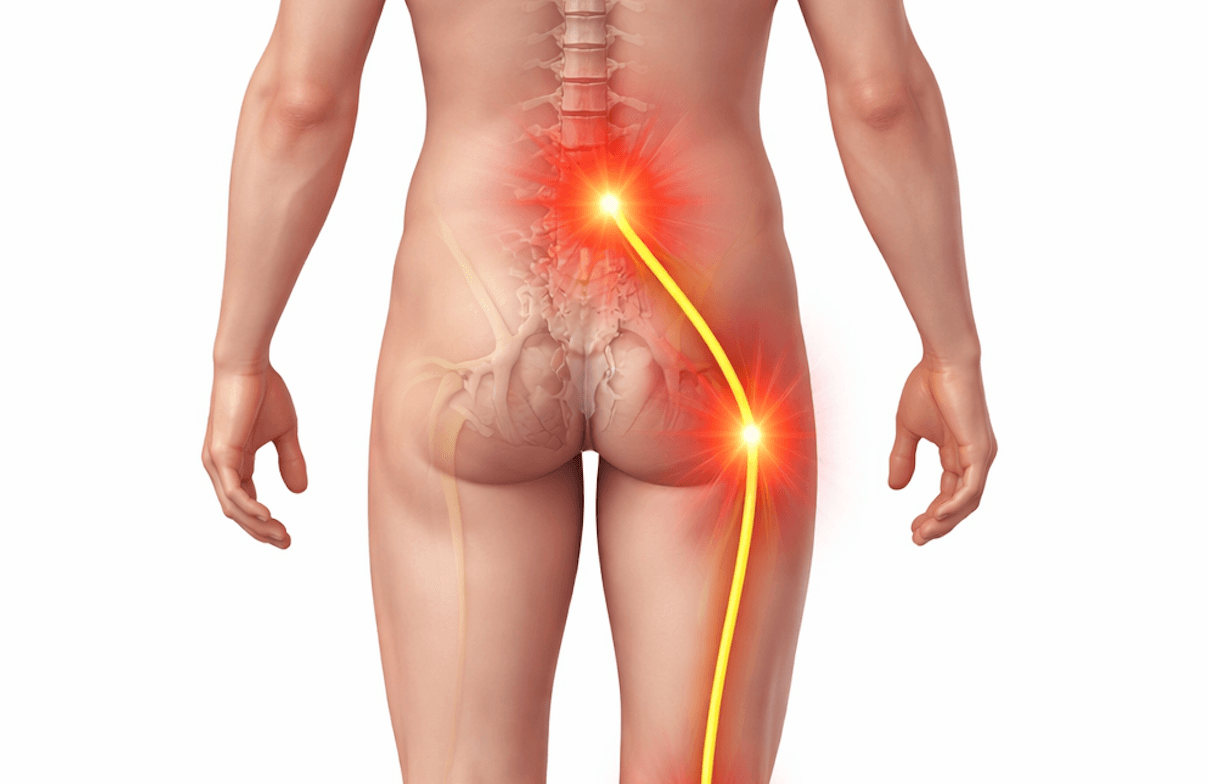
Sciatica occurs when the sciatic nerve becomes irritated or compressed. This nerve is the longest in the body and runs from the lower spine down the back of each leg.
Common symptoms include:
• Pain in the lower back or buttock
• Pain travelling down the leg
• Tingling or numbness
• Weakness in the leg or foot
• Pain that worsens when sitting
Many things can contribute to sciatica such as disc bulges, tight muscles, inflammation, pregnancy, or long periods of sitting.
How TCM Understands Sciatica
In Traditional Chinese Medicine, sciatica is often classified as a Bi Syndrome, which means blockage in the body’s channels.
Pain occurs when the flow of Qi (energy) and Blood becomes stuck - "When energy flows, the body feels good. When it doesn’t, pain appears"
Several patterns may contribute:
1) Qi and Blood Stagnation
Often caused by injury, overuse, or poor posture. Pain is usually sharp and fixed in one spot.
2) Cold and Damp Invasion
Pain feels heavy, stiff, and worse in cold weather.
3) Kidney Deficiency
In TCM the Kidneys support the lower back. When they are weak, the area becomes more vulnerable to pain and injury.
How Acupuncture Can Help
Acupuncture aims to restore the smooth flow of Qi and Blood through the affected channels.
Research and clinical experience show acupuncture may help:
• Reduce inflammation
• Relax tight muscles
• Improve circulation
• Decrease nerve irritation
• Reduce pain levels
Many people notice improvement after several treatments, especially when the underlying cause (diagnosed pattern) is addressed and treated.
https://www.jstage.jst.go.jp/article/bst/16/1/16_2022.01039/_pdf/-char/en
Other TCM Treatments That May Be Used With Acupuncture
Cupping
Helps release muscle tension and improve blood flow in the back and hips.
Electro-acupuncture
A gentle electrical current is applied to acupuncture needles to stimulate nerves and muscles more strongly.
Gua Sha
Encourages blood flow and helps relieve muscle tightness.
When to Seek Help
If pain is severe, persistent, or associated with weakness or numbness, it is important to seek professional care. Early treatment can help prevent the condition from becoming chronic.